How to spend 10 Days in Ireland: The Perfect Itinerary for First-Time Visitors for a trip you’ll love
How to spend 10 days in Ireland: a detailed, beautiful and realistic Ireland itinerary to see Dublin, the West and get a proper taste of Ireland in just ten days.
Ten days is, in my opinion, the ideal amount of time to visit Ireland for the first time.
It is long enough to see the highlights without rushing, short enough to keep the pace enjoyable, and just right for fitting in both the city energy of Dublin and the wild, breathtaking landscapes that make Ireland like nowhere else on earth.
I have lived in Ireland for many years, driven these roads many times, and taken visitors on variations of this route more than I can count.
This is the itinerary I actually recommend when friends ask me where to go. Not a list of options: a route, with a clear direction, and the confidence of someone who knows the country well.
It takes you from Dublin south through Kilkenny and Cork, west to the Cliffs of Moher and Galway, north into Connemara, and back to Dublin — a loop that covers the best of the country without ever retracing your steps.
It works for couples, families, and groups of friends. It works in summer and (with a little flexibility) in shoulder season too.
Let’s go!
Please note: this post contains affiliate links. Should you make a purchase through them, we might make a small commission.
Before You Go: A Few Things Worth Knowing
You will need a car for days 3–10.
Ireland’s public transport outside Dublin exists but will slow you down vs self driving, and the most beautiful parts of the country are simply not accessible without a car.
Driving in Ireland is on the left, roads in the west can be narrow, and distances take longer than Google Maps suggests.
If you haven’t driven in Ireland before, I highly recommend reading our guide to driving in Ireland before you travel — it will save you significant stress.

Pick up your car on day 3, not on arrival. You don’t need it in Dublin and parking in the city is expensive and unnecessary. Collect it the morning you leave for Kilkenny.
The weather is unpredictable. Pack layers and a waterproof jacket regardless of season.
The west of Ireland in particular can change in minutes. This is not a reason not to go — it’s just a reason to pack properly. You can find our full packing list for Ireland here.
Book in advance. Very popular attractions such as the Book of Kells, Guinness Storehouse and Irish dancing shoes can have very long lines: book ahead to save time.
Day 1 — Arrival Day: Dublin
Your first day in Ireland is an arrival day, and I want to be honest with you: treat it as such.
Don’t try to pack in sightseeing after a long flight. The itinerary ahead is full and wonderful — there is no need to start exhausted.
Getting from Dublin Airport to the City
The easiest and most affordable options are the Aircoach or the Dublin Bus 747 route, both of which run frequently and drop you centrally.
Taxis are also available and more comfortable if you have a lot of luggage and you can also treat yourself to a private car service should you want to be met by a driver or be in need for car seats for kids (taxis don’t provide them nor require them). Lines for taxis in Dublin airport can be brutal so I am finding myself using private car service more and more: expensive but worth it, waiting in the cold is not fun! My favorite car service provider is this one.
or are traveling with young children. Read our full guide on getting from Dublin Airport to the city centre here.
Where to Stay
For the Dublin days, I recommend staying in the city centre, ideally around the Trinity College / Merrion Square area.
This puts you within walking distance of almost everything and makes the mornings easy. Good options at different price points include The Clayton hotel and The Merrion Hotel for something special.
This Evening
Check in, freshen up, and take a gentle first walk around the city centre. Dublin is very manageable on foot and an evening stroll around Grafton Street, St Stephen’s Green, and Merrion Square gives you a lovely first feel for the city without any pressure.
For dinner you have many options, Irish or international: Angelina, Fire, Rosa Madre, Elephant and Castle and and Red Torch Ginger will satisfy most cravings!
Day 2 — Dublin: South Side
Today is your first full day in Dublin and I’ve planned it around the south side of the city, which is where the majority of the most famous sights are concentrated.
Morning: Breakfast, then Trinity College and the Book of Kells
Start with a proper Irish breakfast — this is not a meal to skip!
A full Irish fry with rashers, sausages, eggs, and potato fritters is the ideal fuel for a day of sightseeing. Good spots near the city centee include Lemon Jelly Café, The Hairy Lemon, and many others; you really won’t have to look far.
After breakfast, head to Trinity College, the oldest university in Ireland and one of the most beautiful spaces in the city.

The campus is free to wander and worth it for the architecture and atmosphere alone. Inside, the Book of Kells exhibition is a must — a medieval illuminated manuscript dating to the 9th century, now housed in an immersive, interactive exhibition that brings it to life beautifully. Suitable and genuinely engaging for older kids too.
Get skip-the-line tickets for Trinity College and the Book of Kells here.
Late Morning: Grafton Street
A stroll down Grafton Street — Dublin’s main pedestrianised shopping street — is one of those simple pleasures that never gets old. Street performers, coffee shops, and the buzz of the city. St Stephen’s Green is right at the end and a lovely spot for a break if the weather is kind.
Lunch: Temple Bar
Make your way to Temple Bar for lunch.
Touristy, yes — but genuinely pretty during the day, and with excellent food options. The Porterhouse for something Irish, Queen of Tarts for something cozy, or Milano if you’re traveling with children who need something reliably pleasing. The Ha’Penny Bridge is a two-minute walk and an essential Dublin photo stop.
Afternoon: Dublin Castle and the Chester Beatty Library
Dublin Castle is a short walk from Temple Bar. You can visit the state rooms inside or simply walk the courtyard, but don’t miss the Chester Beatty Library in the castle grounds — one of the best free museums in Ireland, with an extraordinary collection of manuscripts and treasures from across Asia, the Middle East, and North Africa. Genuinely wonderful and very underrated.

Evening: Dinner and a Pub
This evening, explore Dublin’s pub culture properly. The Brazen Head — reputedly the oldest pub in Ireland — is a classic for dinner and traditional music. For a more contemporary evening, the area around Camden Street and South William Street has excellent restaurants and lively bars. Take a traditional pub tour if you’d like a guided introduction.
Day 3 — Dublin: St Patrick’s Cathedral and the Guinness Storehouse
Morning: St Patrick’s Cathedral and Marsh’s Library
Start the morning at St Patrick’s Cathedral, the national cathedral of the Church of Ireland.
Impressive and beautiful, with the added draw of Jonathan Swift — author of Gulliver’s Travels — buried here. Just around the corner is Marsh’s Library, one of my favorite small attractions in all of Dublin: a historic library said to be haunted by the ghost of Archbishop Narcissus Marsh, atmospheric and wonderful.

Afternoon: The Guinness Storehouse
No first visit to Dublin is complete without the Guinness Storehouse. Seven floors of exhibition on the history and making of Ireland’s most iconic drink, finishing with a pint (or non-alcoholic equivalent) at the Gravity Bar with panoramic views over the city. It’s popular for a reason — book ahead.
Get your Guinness Storehouse tickets here.
Evening: Last Night in Dublin
Your last evening in Dublin before the road trip begins. Have a relaxed dinner in the city — my favorites in the area include Rosa Madre for Italian, Richmond on Camden Street for contemporary Irish cooking, or La Gordita for something casual and good. Then an early night: tomorrow the road trip starts.
Day 4 — Glendalough and Kilkenny
Pick up your hire car this morning and leave Dublin heading south. Today has two stops that could not be more different from each other, and both are wonderful.
Morning: Glendalough
Glendalough is about an hour south of Dublin in the Wicklow Mountains National Park, and it is one of those places that stops you in your tracks.
An ancient monastic settlement in a glacial valley with two lakes, a round tower, and a cemetery full of Celtic crosses — it has a stillness and atmosphere that is genuinely hard to describe. Go in the morning before the tour buses arrive if you can.

It’s also excellent with children: the valley floor is easy to walk, the lakes are beautiful, and the round tower is immediately captivating for small people.
Afternoon and Evening: Kilkenny
An hour southwest of Glendalough brings you to Kilkenny, a medieval city that is one of my favourite places in Ireland. The castle is magnificent and well worth the tour.
The streets are full of independent shops, good restaurants, and the kind of atmosphere that makes you want to stay longer than planned.
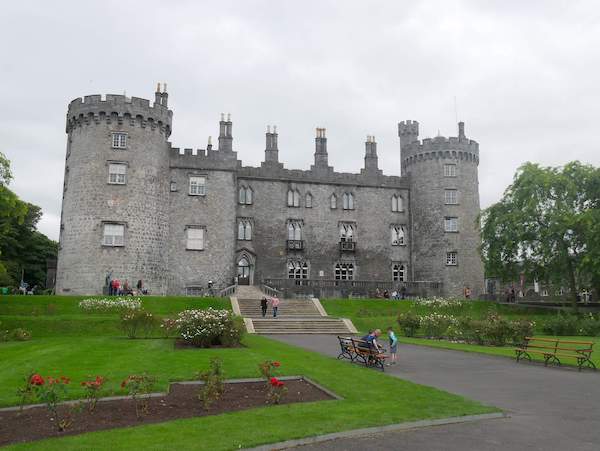
Walk the Medieval Mile — the stretch from the castle to St Canice’s Cathedral — and you’ll understand immediately why this city punches so far above its size. In the evening, Kilkenny is lively and warm; the pub scene here is excellent.
Where to Stay: Kilkenny River Court Hotel – perfectly located and ideal to rest after a day on the road.
Day 5 — Cork and Blarney Castle
Head southwest from Kilkenny to Cork today — about an hour and a half’s drive, with Blarney Castle on the way.
Morning: Blarney Castle
Blarney Castle is famous for the stone — kissing it is said to bestow the gift of eloquence, and there is usually a queue of people willing to dangle backwards off a parapet to find out. You don’t have to kiss it to enjoy the place: the castle ruins are genuinely beautiful, the grounds are spectacular, and the Poison Garden (exactly what the name suggests) is a highlight, particularly for curious children.

Afternoon and Evening: Cork City
Cork is Ireland’s second city and deeply proud of it. Small, characterful, and with an excellent food scene — the English Market is one of the great food markets in Ireland and worth an hour of your time.
Spend the evening in Cork: it’s a lively, friendly city with great pubs and restaurants and a very different feel from Dublin. More local, somehow.
Where to Stay: The River Lee Hotel is well located and works well for families and couples alike, we stayed here with three different generations and everyone was happy!
Day 6 — The Wild Atlantic Way: Towards the Cliffs of Moher
Today is one of the great driving days of the trip: heading north from Cork along the Wild Atlantic Way, through County Clare, towards the Cliffs of Moher.
The Drive
The drive from Cork to the Cliffs takes around three hours without stops, but stopping is the whole point. The coastline of County Clare is extraordinary: dramatic cliffs, small harbor villages, and an ever-changing Atlantic sky. Take the coast road where you can.
The Cliffs of Moher
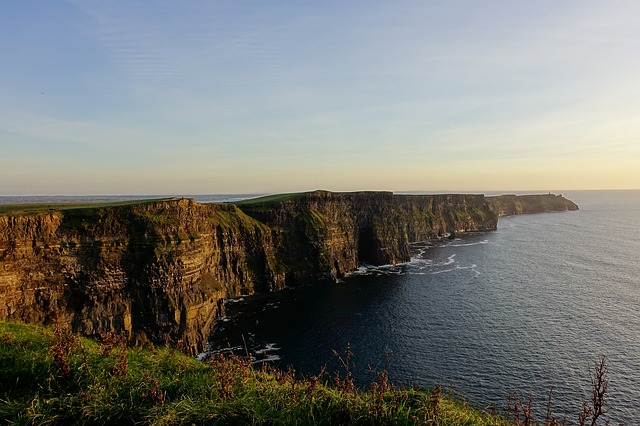
Ireland’s most visited natural attraction, and they earn it. Standing at the edge of these 200-metre cliffs with the Atlantic below is one of those genuinely humbling moments. Arrive in the late afternoon if you can, when the light is at its best and the day-trip crowds have thinned.

The visitor centre is well designed and worth a quick stop before walking the clifftop path. The main lookout areas are accessible with children and there are varying levels of walk depending on how much ground you want to cover.
Where to Stay: Stay sat the aptly named Cliffs of Moher Hotel in Liscannon or at the Doolin Hotel in Doolin (both lovely hotels and localities)
Day 7 — The Burren and Galway
Morning: The Burren
Before heading to Galway, spend the morning in the Burren — one of the most unusual and beautiful landscapes in Ireland. A vast limestone plateau covered in wildflowers, ancient dolmens, and an eerie, otherworldly silence.
Children often find the Burren’s strange surface — cracked limestone as far as the eye can see — genuinely fascinating. It looks like another planet. The Burren perfumery is also a lovely stop for everyone.
Afternoon and Evening: Galway
Galway is one of Ireland’s great cities and it hits differently from Dublin: younger in energy, more artistic, filled with street musicians and color.
Shop Street and Quay Street in the city centre are the heart of it all and it is lovely for wandering.

Arrive in the afternoon, walk the city, and spend the evening here — Galway evenings are something special. The pubs are excellent and the craic (the Irish concept of fun, banter, and good company) is real.
Where to Stay: The Galmont Hotel is a classic choice in a perfect position to explore the city on foot (has parking). I recommend to stay two nights and explore Connemara from here.
Day 8 — Connemara
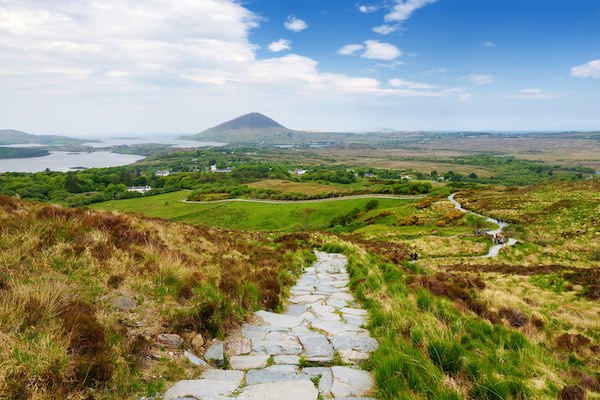
Today is the most visually dramatic day of the whole trip. Connemara, the region stretching northwest of Galway, is the Ireland of postcards and imagination: bog land, mountains, wild coast, white cottages, and a quality of light that photographers travel from all over the world to capture.
Kylemore Abbey
One of Ireland’s most iconic images — a Victorian-looking castle reflected in a lake, with mountains behind. It’s as beautiful in person as it looks in photographs. The walled garden is excellent and the whole site works well for all ages.
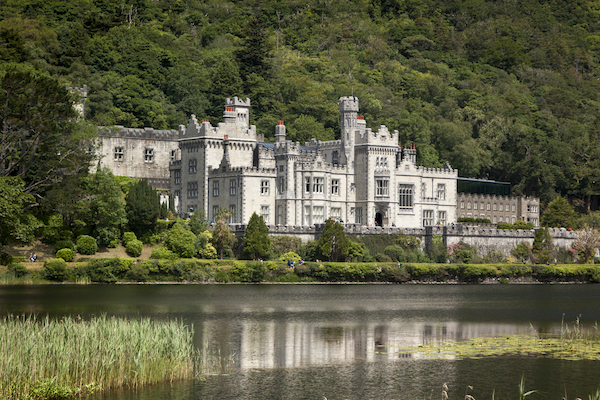
The Sky Road and the Coast
If you have time, drive the Sky Road near Clifden — a coastal loop with views that are simply extraordinary. The road is narrow and Irish in character (meaning it may seem alarming at first) but the effort is absolutely worth it.
Connemara National Park
If you’re interested in walking or hiking, Connemara National Park near Letterfrack has trails for all levels and beautiful mountain scenery. The visitor centre is good.
Return to Galway for your second night.
Day 9 — Clonmacnoise and the Road Back East
Today you begin the journey back towards Dublin, but with one more extraordinary stop on the way.
Clonmacnoise
Clonmacnoise is an early medieval monastic site on the banks of the River Shannon, and it is one of those places that genuinely stops you. A cluster of ancient churches, carved high crosses, round towers, and a cemetery with grave slabs dating back to the 7th century, all in a loop of the Shannon with water on three sides.
It is less visited than Glendalough — which means you may well have it almost to yourself — and it is, if anything, more impressive. Don’t skip it.
I recommend you make your way to Dublin for the night, leave the car and rest.
Day 10 — Return to Dublin
If you have a late flight, this is a good morning for anything you didn’t manage in the first Dublin days: the EPIC museum, the National Museum, the National Gallery (free and excellent), a final walk along the Grand Canal, or simply a long breakfast and some last-minute shopping on Grafton Street.
The Aircoach and Dublin Bus 747 both run regularly to the airport. If you have luggage and an early flight, a taxi is a reasonable last indulgence.
Practical Tips for This Itinerary
Driving times are real: Irish roads, particularly in the west and on the Wild Atlantic Way, are slower than you’d expect from the distances. Always add buffer time and never plan to drive more than 3 hours in a day if you also want to sightsee.
Cash is useful but not essential: Ireland is card-friendly almost everywhere, but some rural car parks and smaller attractions still prefer cash.
The weather: Have waterproofs accessible every day, not packed at the bottom of your bag. Irish weather changes fast and the days you get caught out will be the ones you remember least fondly.
Food: Irish food has improved enormously and you will eat very well on this route. The west of Ireland in particular has excellent seafood, and most towns have at least one genuinely good restaurant. Don’t eat in hotel restaurants every night — get out and explore.
With kids: This itinerary works very well with children. Glendalough, Blarney Castle, the Cliffs of Moher, Connemara, and Kylemore Abbey are all excellent with kids of most ages. The driving days are broken up by stops. Pack snacks, download something for the car, and embrace the adventure.
You might also enjoy:

Mama Loves Ireland
Céad míle fáilte! A thousand times welcome! I am a travel-loving Italian Mama lucky enough to call Ireland her home. Let my articles help you plan your trip to Ireland and get ready to fall in love with the Emerald Isle, just like I did. With love. M x